
The best material for a deck in direct sunlight is PVC decking, followed closely by high-quality capped composite decking. Both resist UV fading, handle heat better than wood, and stay structurally stable through years of sun exposure. Wood is a classic choice but requires much more maintenance when baked by the sun day after day.
This article compares every major decking material for sun performance — heat retention, fading, durability, and long-term value — so you can make a confident choice.
Why Sunlight Is Hard on Decking Materials
Direct sunlight is a deck’s toughest opponent. UV rays break down surface color and material structure over time. Heat causes boards to expand, contract, warp, and crack. And when a deck bakes in the sun for hours every day, it can become genuinely uncomfortable to walk on barefoot.
Not every decking material handles these conditions equally. Choosing the wrong one means faded, warped, or splintered boards within just a few years — plus the cost and hassle of early replacement or heavy maintenance.
Getting the material right from the start saves you money, time, and frustration for years down the road.
PVC Decking: The Top Performer in Full Sun
Why PVC Handles Sun So Well
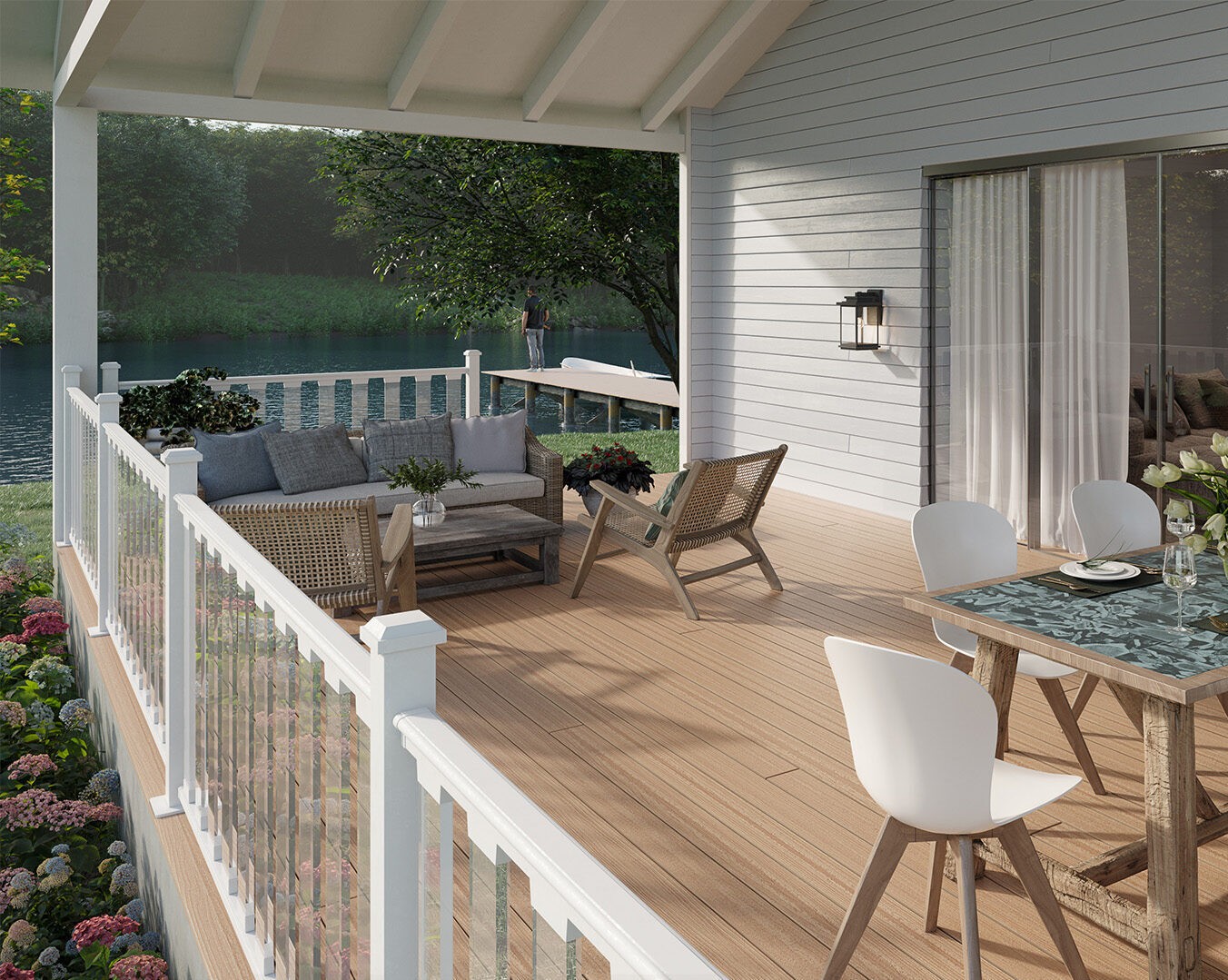
PVC decking is made entirely from plastic — there is no wood fiber in the mix. That matters because wood fiber is what absorbs moisture and breaks down under UV exposure. Without it, PVC holds up remarkably well in direct sunlight.
High-quality PVC boards resist UV fading, do not rot, do not splinter, and stay structurally stable through heat cycles. They also clean up easily — a quick wash removes dirt, pollen, and sun-baked grime.
The Heat Question
PVC does get warm in direct sun — all decking materials do. However, premium PVC brands use lighter colors and reflective pigments that reduce surface temperature compared to darker composite boards. If keeping the deck surface cooler is a priority, choose lighter-colored PVC boards.
Our PVC decking page covers the specific brands and product lines we install most — all chosen for their performance in real Pennsylvania and Maryland weather conditions.
Capped Composite Decking: The Best Balance of Beauty and Sun Resistance
What Makes Capped Composite Different
Not all composite decking is equal when it comes to sun exposure. Older or uncapped composite boards — made from a blend of wood fiber and plastic — can fade, stain, and swell in prolonged sun. Capped composite boards are a different story.
Capped composite has a protective polymer shell wrapped around the outside of each board. That cap blocks UV rays, resists moisture, and prevents the color from fading as quickly. Top brands like Trex, TimberTech, and Fiberon offer capped composite lines with fade and stain warranties ranging from 25 to 30 years.

Heat Retention in Capped Composite
Capped composite boards do absorb heat — sometimes noticeably so on very hot days. Darker colors get hotter than lighter ones. If your deck gets full sun all afternoon, choosing a lighter board color makes a real comfort difference.
The U.S. Department of Energy notes that lighter-colored surfaces reflect more solar energy than dark ones — a principle that applies directly to decking surface temperatures on sun-exposed decks.
Our composite deck page shows the full range of capped composite options available, including lighter-toned boards well-suited for hot, sunny locations.
Wood Decking in Direct Sunlight: Beautiful but Demanding
How Sun Affects Natural Wood
Wood is still a popular choice — and for good reason. It looks natural, feels comfortable underfoot, and has a warmth that synthetic materials try to replicate. But wood and direct sunlight have a complicated relationship.
UV rays bleach and gray wood relatively quickly. Without regular sealing and staining, a pressure-treated wood deck in full sun will start showing wear within two to three years. Cedar and redwood hold up better than pressure-treated pine, but they still need consistent maintenance to stay protected.
What Wood Requires to Survive Sun Exposure
If you choose wood for a sun-exposed deck, plan for:
- Annual cleaning and inspection
- Resealing or restaining every 1 to 3 years depending on exposure
- Sanding any rough or splintered areas as they develop
That maintenance calendar is not a problem for homeowners who enjoy caring for their deck. But for those who want minimal upkeep, wood in direct sun is a harder sell.
Our wood decking page covers the best wood species choices and what proper maintenance looks like for each.
Comparing Decking Materials for Sun Performance
| Material | UV Fade Resistance | Heat Retention | Maintenance | Lifespan in Sun |
|---|---|---|---|---|
| PVC | Excellent | Low-moderate | Very low | 25–30+ years |
| Capped composite | Very good | Moderate | Low | 25–30 years |
| Uncapped composite | Fair | Moderate | Moderate | 10–15 years |
| Cedar / redwood | Fair | Low | High | 15–20 years (with care) |
| Pressure-treated pine | Poor | Low | High | 10–15 years (with care) |
Does Deck Color Matter in Direct Sunlight?
Yes — more than most people realize. Darker boards absorb significantly more heat than lighter ones. On a 90°F summer afternoon, a dark composite board can reach surface temperatures well above 130°F — too hot to walk on barefoot comfortably.
Lighter grays, tans, and sandy tones stay noticeably cooler. If your deck faces south or west and gets hours of afternoon sun, a lighter color is the smarter practical choice — regardless of the material you select.
The Lawrence Berkeley National Laboratory has studied surface temperature differences between dark and light building materials extensively, confirming that lighter surfaces consistently run cooler under direct solar exposure.
Adding Shade to a Sun-Drenched Deck
The best deck material for direct sunlight works even better when paired with some shade. A pergola overhead breaks up the sun without fully enclosing the space, making the deck far more comfortable on hot days — and protecting the decking surface from constant UV bombardment.
A pergola installation is one of the most popular upgrades for sun-exposed decks. It extends the hours the deck is actually usable and reduces long-term UV wear on the boards below.
Final Thoughts
For a deck in direct sunlight, PVC and capped composite are the clear front-runners. Both resist UV fading, handle heat cycles well, and require far less maintenance than wood under harsh sun conditions. Choose lighter colors to keep surface temperatures manageable, and consider adding a pergola to protect both the deck and the people using it.
Wood remains a viable option if you are committed to regular maintenance — but for a low-maintenance, long-lasting result in full sun, synthetic materials are the smarter investment.
Ready to choose the right material for your sunny deck? Contact West Shire Decks — our team will help you pick the best option for your yard, your climate, and your lifestyle.