
Choosing between a deck and a patio in Central Pennsylvania is one of the first decisions homeowners face when planning outdoor living space, and it is one where the right answer is genuinely different from property to property. Both options create valuable outdoor living space. Both add to your home’s appeal and resale value. But they work differently, cost differently, suit different yard conditions, and produce a different daily living experience. According to the 2024 Cost vs. Value Report, wood decks return approximately 83 percent of their cost at resale while patios return 55 to 80 percent depending on material quality. TimberTech’s direct comparison of the two options identifies site conditions, budget, maintenance preference, and intended use as the four factors that should drive the decision. This guide covers all four so you can make a confident choice before any material is ordered or any contractor is engaged.
What Makes a Deck and a Patio Fundamentally Different
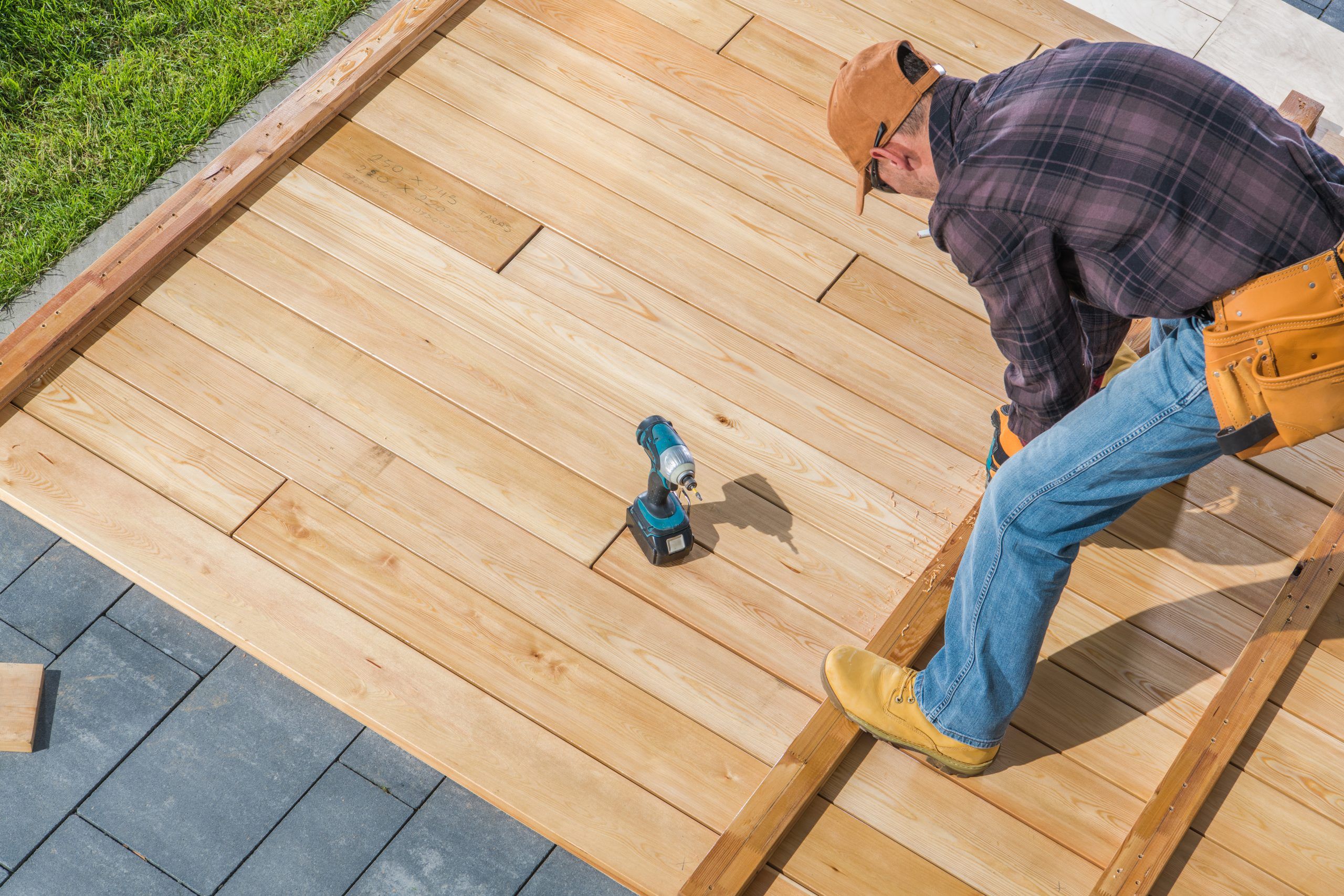
The most important distinction between a deck and a patio is structural. A deck is an elevated structure built from wood or composite boards attached to or near the home, elevated above grade on a framed system supported by footings and posts. A patio is a ground-level hardscaped surface made from concrete, pavers, stone, or brick that sits directly on or just above the ground.
That structural difference produces everything else that distinguishes the two options. A deck can be built on sloped, uneven, or otherwise challenging terrain by elevating the structure above site conditions that a ground-level patio cannot accommodate without significant grading. A patio requires relatively flat ground and adequate drainage to perform well over time. A deck requires structural permits and multiple building inspections in Pennsylvania. A patio typically does not require a permit unless it involves retaining walls or structures that affect drainage.
Both decks and patios have pros and cons. Decks tend to be more expensive but offer better views, more customization, and higher resale value. Patios are generally more budget-friendly, low-maintenance, and longer-lasting. That summary is accurate as far as it goes but leaves out the site-specific factors that often determine which option is genuinely available for a given Central Pennsylvania property.
When Your Yard Makes the Decision for You
For many Central Pennsylvania homeowners, the yard itself narrows the choice before any preference or budget consideration enters the conversation.
A significantly sloped backyard makes a deck the more practical option. A deck’s elevated framing system can be engineered to follow the grade of the yard, creating a level surface at a consistent elevation above the home’s rear entry door regardless of how much the ground drops away. A patio on the same sloped lot would require significant excavation and grading to create a level surface, adding cost and disruption while potentially affecting drainage in ways that the homeowner will manage for the life of the property.
A flat yard opens both options genuinely. On a flat Central Pennsylvania lot with stable soil and good drainage, both a deck and a patio are structurally straightforward. In this case, the decision shifts to preference, budget, maintenance, and intended use.
A yard with access challenges including tight side passages, overhead utility lines close to the house, or proximity to property lines that limit equipment movement may favor a patio, since patio installation requires less heavy equipment than deck construction and can often be approached from multiple directions with smaller tools.
According to Bower and Branch’s deck versus patio comparison, a deck is ideal for uneven terrain or elevated views while a patio works best on level surfaces. That terrain-first assessment is the most practical starting point for Central Pennsylvania homeowners evaluating the two options.
West Shire Decks builds custom decks throughout Mechanicsburg, Dillsburg, York PA, Monkton MD, and surrounding Central Pennsylvania communities, including multi-level builds designed specifically for sloped yards. As Central PA’s only TimberTech Platinum Certified Contractor and a six-time winner of Harrisburg Magazine’s “Simply the Best” award from 2020 through 2025, their team assesses site conditions during the free consultation to determine what each property actually allows before any design conversation begins.
The Permit and Code Requirement Difference
Pennsylvania’s Uniform Construction Code requires a building permit for any deck more than 30 inches above grade. That permit requires construction drawings, a plan review, and inspections at the footing, framing, and final stages. For attached decks, the ledger board connection to the home must meet specific fastening and flashing requirements that the framing inspection verifies.
Patios at ground level typically do not require a building permit in most Pennsylvania municipalities, though local zoning ordinances still govern setback distances from property lines and lot coverage limits. A patio that involves a retaining wall of more than certain heights, or one that significantly affects drainage patterns, may trigger a permit requirement in specific municipalities.
The permit process for a deck adds time before construction can begin. Permit review in Dauphin County and surrounding Central Pennsylvania communities typically takes one to three weeks. A well-organized contractor submits the permit application as soon as the design is finalized and uses the review window for material ordering and scheduling so construction begins promptly after approval. The permit process is not a disadvantage of decks so much as a timeline consideration to factor into project planning.
The Honest Cost Comparison
The cost difference between a deck and a patio is real and meaningful, though it varies significantly by material choice on both sides of the comparison.
The cost to install a patio can be up to 60 percent less than the cost to build a deck, depending on the materials you choose. At the entry level, a basic poured concrete patio runs $5 to $15 per square foot installed while a pressure treated wood deck runs $25 to $40 per square foot. That is a significant difference on a 300 square foot project: $1,500 to $4,500 for a concrete patio versus $7,500 to $12,000 for a wood deck.
The gap narrows as patio material quality increases. A stamped concrete patio runs $15 to $30 per square foot. A paver patio with quality stone or brick runs $15 to $50 per square foot. A premium natural stone patio using flagstone or bluestone runs $30 to $60 per square foot or more. At the premium end of the patio category, the cost difference between a quality patio and a mid-range composite deck is significantly smaller than the entry-level comparison suggests.
For Central Pennsylvania homeowners where budget is the primary constraint and the site is flat with good drainage, a quality paver or concrete patio at a lower initial investment is a legitimate choice. For homeowners with sloped sites, a preference for elevated outdoor living, or a goal of maximizing resale value, a professionally built deck consistently outperforms.
Maintenance Over Time: The Full Picture
Maintenance requirements differ significantly between decks and patios, and the long-term cost of maintenance is an important part of the total ownership cost calculation that the upfront comparison alone does not capture.
Wood decks require the most maintenance of any outdoor surface category. Annual sealing and staining every two to three years in Central Pennsylvania’s climate is the standard maintenance commitment for a pressure treated wood deck. Without consistent maintenance, wood weathers, checks, and rots in ways that accelerate significantly through the freeze-thaw cycles and humid summers that the region produces. According to T-Squared Landscaping’s 2025 comparison, wood decks need regular staining and sealing every two years at approximately $0.30 to $0.40 per square foot for power washing plus $0.75 to $4.00 per square foot for sealing.
Composite decks from brands like TimberTech and Trex require no sealing or staining. They resist fading, staining, moisture, and insects and need only periodic cleaning with mild soap and water. Composite decking offers less maintenance but comes at a higher upfront price. Over a ten to fifteen year period, the maintenance cost savings on a composite deck relative to a wood deck are significant and narrow the total cost of ownership gap considerably.
Concrete patios require the least maintenance per square foot of any option. Annual hosing and periodic resealing to prevent surface cracking and staining is the standard commitment. A patio is low maintenance and durable, often lasting for decades with minimal upkeep. According to T-Squared Landscaping, even major patio maintenance including resealing costs approximately $2.00 per square foot, which is less than comparable deck maintenance costs.
Paver patios require slightly more maintenance than concrete because the sand base between individual pavers can be disturbed by frost action in Pennsylvania’s winters, requiring periodic re-sanding and releveling of settled pavers.
For Central Pennsylvania homeowners who want the lowest ongoing maintenance commitment, a concrete or paver patio is the answer. For those who want outdoor living space that combines low maintenance with design flexibility and resale value, a composite deck is the answer.
Resale Value: Where Decks Hold a Clear Advantage
The resale value comparison between decks and patios consistently favors decks, and by a meaningful margin that holds across multiple years of Cost vs. Value Report data.
According to 2024 reports, wood decks give you about 83 percent return on investment while patios offer around 55 to 80 percent ROI. The NAR gives deck additions a joy score of 9.8 out of 10, the highest of any renovation category they track. Real estate professionals consistently rate decks as one of the top five outdoor features buyers look for when evaluating a home.
Resale value for patios is usually less than 50 percent return on investment, while decks offer 60 to 80 percent ROI as long as the deck is in good condition.
The resale advantage of decks over patios reflects buyer behavior: most homebuyers place more value on an elevated outdoor living platform attached to the home than on a ground-level hardscaped surface. A deck creates a direct visual and functional connection between the home’s interior and the outdoor space that a patio at grade level does not replicate in the same way.
For homeowners who plan to sell within five to seven years and want to maximize the return on their outdoor living investment, a professionally built deck on a well-suited site consistently outperforms a patio of equivalent construction quality in resale impact.
Lifestyle Considerations: Which Suits How You Actually Live
Beyond site conditions, cost, maintenance, and resale, the lifestyle fit of each option is worth honest assessment before making a final decision.
Decks create elevated outdoor rooms that connect directly to the home at door height. The seamless transition from the kitchen or living room through a sliding door onto a deck at the same elevation makes outdoor dining and gathering feel like a natural extension of indoor living. For families who eat outside regularly, entertain in moderate-sized groups, or want to use outdoor space across Central Pennsylvania’s morning and evening hours when ground-level surfaces may be damp from dew, the deck’s elevation advantage is a genuine daily quality of life benefit.
Patios create a ground-level connection to the yard that integrates the hardscaped area with the lawn and garden in a way a raised deck does not. For families with young children who want the yard accessible from the gathering space without navigating stairs, or for homeowners who specifically want to incorporate a fire pit that is safer and more practical at ground level, a patio’s grade-level placement is an advantage.
Stone patios are fire-safe, a great option if you are planning a cozy fire pit setup. The integration of a fire feature into a ground-level patio is structurally simpler and more visually natural than elevated deck fire features, which require specific non-combustible materials and clearance management.
Both options work well for dining, entertaining, and relaxation. The question is whether elevated outdoor living with a direct connection to the home’s indoor spaces at door height, or ground-level outdoor living with closer integration with the yard and garden, better matches how your household actually uses and values outdoor space.
Can You Have Both?
For Central Pennsylvania homeowners whose site and budget allow it, combining a deck and a patio is increasingly common and often produces the most versatile outdoor living setup available.
A typical combination uses an upper deck attached to the home at door height, providing the direct indoor-to-outdoor connection and the elevated outdoor room for dining and entertaining. A lower patio at ground level, accessed from the deck via stairs, provides the yard-level space for fire features, garden integration, children’s play zones, or simply a different outdoor experience at a different elevation.
This approach addresses the site conditions that make decks practical on sloped Central Pennsylvania lots while adding the ground-level integration that a patio exclusively provides. The deck handles the elevation change between the home’s door height and the yard. The patio creates usable ground-level space that the sloped yard would not provide without it.
Their project gallery at West Shire Decks shows completed projects across a range of configurations throughout Central Pennsylvania, including multi-level builds that combine elevated deck platforms with ground-level transitions. Their custom deck design and build process starts with your specific site and intended use before any design recommendation is made. Their photos with prices page shows real completed projects with actual costs, which makes both the design possibilities and their financial implications concrete before the first conversation.
A Decision Framework for Central PA Homeowners
The following framework helps clarify which option is the stronger fit for your specific situation.
Choose a deck if your yard has significant slope that makes a flat ground-level patio impractical without expensive grading, if you want a direct connection between your home’s interior and outdoor space at the same elevation, if resale value is a significant consideration and you plan to sell within ten years, if you want design flexibility including multiple levels, pergola structures, integrated lighting, and custom railing, or if you want an outdoor space that feels like a room attached to the home rather than a separate yard feature.
Choose a patio if your yard is flat with good drainage and a ground-level surface is structurally practical, if budget is the primary constraint and a lower upfront cost is more important than resale premium, if minimal ongoing maintenance is a priority and you want a surface that requires almost no annual care, if you want to integrate a fire pit or a ground-level outdoor kitchen more naturally than an elevated deck allows, or if you specifically want the yard to feel accessible from the gathering space without navigating stairs.
Consider both if your site has a slope that naturally accommodates a deck-to-patio transition, if your budget allows a combination build, or if your household wants both the elevated indoor-to-outdoor connection and the ground-level yard integration that neither option alone fully provides.

Final Thoughts
Choosing between a deck and a patio in Central Pennsylvania is a decision that the site often influences as much as personal preference. A sloped yard makes a deck the practical choice. A flat yard opens both options genuinely. When both are available, resale value, maintenance commitment, lifestyle fit, and budget all enter the calculation.
The 2024 Cost vs. Value Report’s finding that wood decks return approximately 83 percent of their cost and composite decks return approximately 68 percent at resale, compared to patios which return 55 to 80 percent depending on material quality, reflects the sustained buyer preference for elevated outdoor living that deck additions consistently deliver. That preference is most pronounced when the deck is professionally designed for its specific site and architecturally integrated with the home it serves.
To discuss which option is right for your Central Pennsylvania property and get a free on-site assessment from a team that builds both deck and patio structures, contact West Shire Decks at 717-557-2340. Serving Mechanicsburg, Dillsburg, York PA, Monkton MD, and surrounding communities throughout Central Pennsylvania.