
You can waterproof the area under a deck by installing an under-deck drainage system, applying a waterproof membrane to the deck framing, and managing ground drainage below. The right approach depends on whether you want a dry usable space underneath or simply want to protect the structure and ground from water damage.
This article walks through every method — from simple and affordable to full under-deck room conversions — so you can pick what fits your deck and your budget.
Why Waterproofing Under a Deck Matters
Rain does not stop when it hits your deck boards. Water finds its way through the gaps, soaks into the framing, pools on the ground below, and creates a damp, dark environment that invites rot, mold, and pests.
Even a well-built deck suffers when water consistently sits under it. Wood framing exposed to repeated moisture cycles starts to break down. Ground pooling causes soil erosion and can affect the deck footings over time. And if you ever wanted to use that under-deck space for anything useful — a patio seating area, a dry storage spot, a protected play zone — standing water makes that impossible.
Waterproofing solves all of this at once.

Method 1: Under-Deck Ceiling Drainage Systems
How They Work
An under-deck drainage system is the most complete waterproofing solution available. Panels or troughs are attached to the underside of the deck joists, angled to channel water toward a gutter system. The water then flows away from the house through a downspout.
The result is a completely dry ceiling under the deck — even during heavy rain. You can put outdoor furniture, lighting, and storage directly underneath without worrying about getting wet.
Types of Under-Deck Drainage Systems
Aluminum trough systems are the most popular. Individual panels snap into place between joists and funnel water to a central gutter. They are durable, low-maintenance, and look clean from below.
Fabric or vinyl membrane systems attach directly to the joists and create a continuous waterproof ceiling. These are often less expensive but may sag over time and require more maintenance.
For a high-quality finish that turns the space below your deck into a true outdoor room, aluminum trough systems are worth every dollar.
Our deck upgrades page covers drainage system options that can be added during a new build or retrofitted to an existing deck.
Method 2: Waterproof Deck Membrane on the Surface
What a Deck Membrane Does
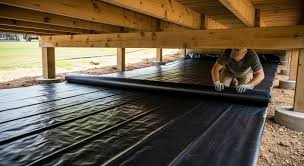
A waterproof membrane is a coating or sheet applied directly on top of the deck boards — or over a plywood subfloor — that stops water from passing through entirely. This approach is common on rooftop decks and second-story decks built over living spaces or garages.
Popular membrane types include:
- Liquid-applied membranes — painted or rolled on, they cure into a flexible waterproof layer
- Sheet membranes — peel-and-stick or torch-applied rubber or TPO sheets
- Vinyl decking membranes — textured vinyl sheets that act as both decking surface and waterproof barrier
These membranes protect whatever is directly below — whether that is a garage ceiling, a lower deck, or a living space.
The National Roofing Contractors Association recommends proper membrane overlap and edge detailing as the most critical factors in preventing water intrusion — the same principles apply to deck membranes.
Method 3: Proper Ground Drainage Below the Deck
Grading and Slope
Even with a drainage system above, water management at ground level matters. The soil under and around your deck should slope away from the house — a minimum of 6 inches of drop over 10 feet, as recommended by the International Residential Code.
Flat or inward-sloping ground sends water back toward the foundation. Over time, this causes far bigger problems than a wet deck space.
Ground Cover That Handles Water
Once grading is correct, cover the ground with a material that manages water well:
- Crushed gravel over landscape fabric drains quickly and prevents puddling
- Concrete with drainage channels works for under-deck patios
- French drain systems redirect water away from the area entirely for persistently wet sites
A French drain — a gravel-filled trench with a perforated pipe — is a simple and effective solution for ground that stays wet after rain. The pipe carries water away from the problem area to a better drainage point in the yard.
Comparing Waterproofing Methods
| Method | Keeps Space Dry? | Best For | Cost |
|---|---|---|---|
| Under-deck drainage system | Yes — fully | Usable outdoor room | Moderate-high |
| Waterproof deck membrane | Yes — fully | Over garages or living space | Moderate-high |
| Ground grading + gravel | Partially | Protecting framing and soil | Low |
| French drain | Partially | Chronically wet sites | Low-moderate |
For the driest, most usable result, combine an under-deck drainage system with proper ground cover below. That two-layer approach handles water both coming through the deck and rising from the ground.
Protecting the Deck Framing Itself
Waterproofing the space under your deck also means protecting the structural wood that holds everything up. Here are the key steps:
- Use pressure-treated lumber rated for ground contact on all posts and beams — this is standard practice and code-required in most areas
- Apply a wood preservative or sealant to cut ends of lumber during construction
- Install post base hardware that lifts posts off the concrete footing, preventing direct wood-to-concrete moisture contact
- Keep gutters and downspouts clear so roof water does not overflow onto the deck structure
The American Wood Council provides detailed guidance on preservative treatment ratings for wood used in exposed and ground-contact applications — worth referencing when specifying materials for a new build.
Can You Waterproof an Existing Deck?
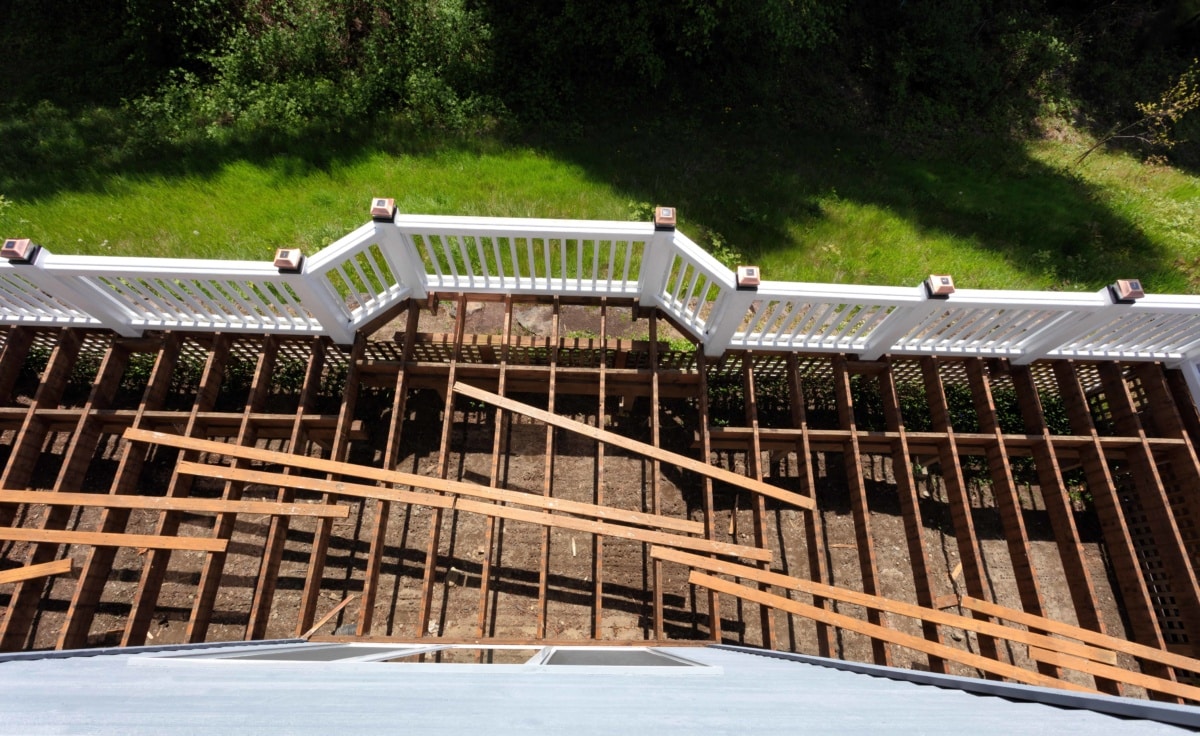
Yes — and it is often easier than people expect. Under-deck drainage systems can be retrofitted to most existing elevated decks without major demolition. A contractor attaches the system to the existing joists from below. Ground cover and grading can be improved at any time.
The only method that is harder to add after the fact is a surface membrane, which typically requires removing and replacing the deck boards. If you are planning a deck resurfacing project, that is the ideal time to add a membrane underneath the new surface.
Final Thoughts
Waterproofing under a deck does not have to be complicated. Start with proper ground drainage and cover. Add an under-deck drainage system if you want a dry, usable space below. Combine both for the best long-term results.
The investment pays off fast — in a protected deck structure, a cleaner yard, and a genuinely useful outdoor space that stays dry rain or shine.
Ready to waterproof your deck the right way? Contact West Shire Decks — our team builds and upgrades decks across PA and MD with proper drainage built in from the start.